What CAQM Direction No. 98 Means for Your Plant — and How to Get There The Central Pollution Control Board does not normally tell you which technology to use for emission control. Direction No. 98 from CAQM is different. It not only sets the particulate matter (PM) limit — 50 mg/Nm³, uniform, mandatory — it references specific technology guidance from IIT Kanpur that names which APCD type suits which industrial source. For plants operating boilers, thermic fluid heaters, or metal furnaces in t
Read the guide
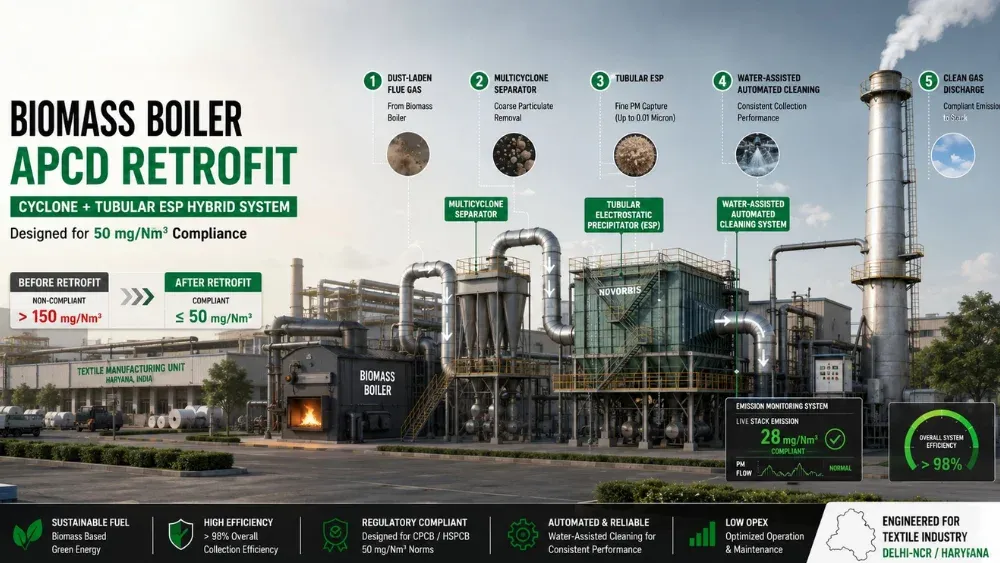

What CAQM Direction No. 98 Means for Your Plant — and How to Get There The Central Pollution Control Board does not normally tell you which technology to use for emission control. Direction No. 98 from CAQM is different. It not only sets the particulate matter (PM) limit — 50 mg/Nm³, uniform, mandatory — it references specific technology guidance from IIT Kanpur that names which APCD type suits which industrial source. For plants operating boilers, thermic fluid heaters, or metal furnaces in t
A Practical Guide for Plant Owners, Consultants & Compliance Teams Walk into almost any industrial plant in India — a biomass boiler room, a metal furnace shed, a food processing unit with a thermic fluid heater — and you will find one of two things: either a properly functioning air pollution control device keeping stack emissions within limits, or an existing system that is struggling to do so under tightening norms. Over the past two years, that second scenario has become considerably more
Diesel Generator (DG) sets are widely used for backup power in industries, commercial buildings, hospitals, residential complexes, and construction sites. However, DG sets emit harmful pollutants that contribute to air pollution. To control these emissions, RECD for DG Set has become mandatory in many regions. This beginner-friendly guide explains what RECD is, why it is required, how it works, types, benefits, and compliance details—all in simple language. What Is RECD for DG Set? RECD stan
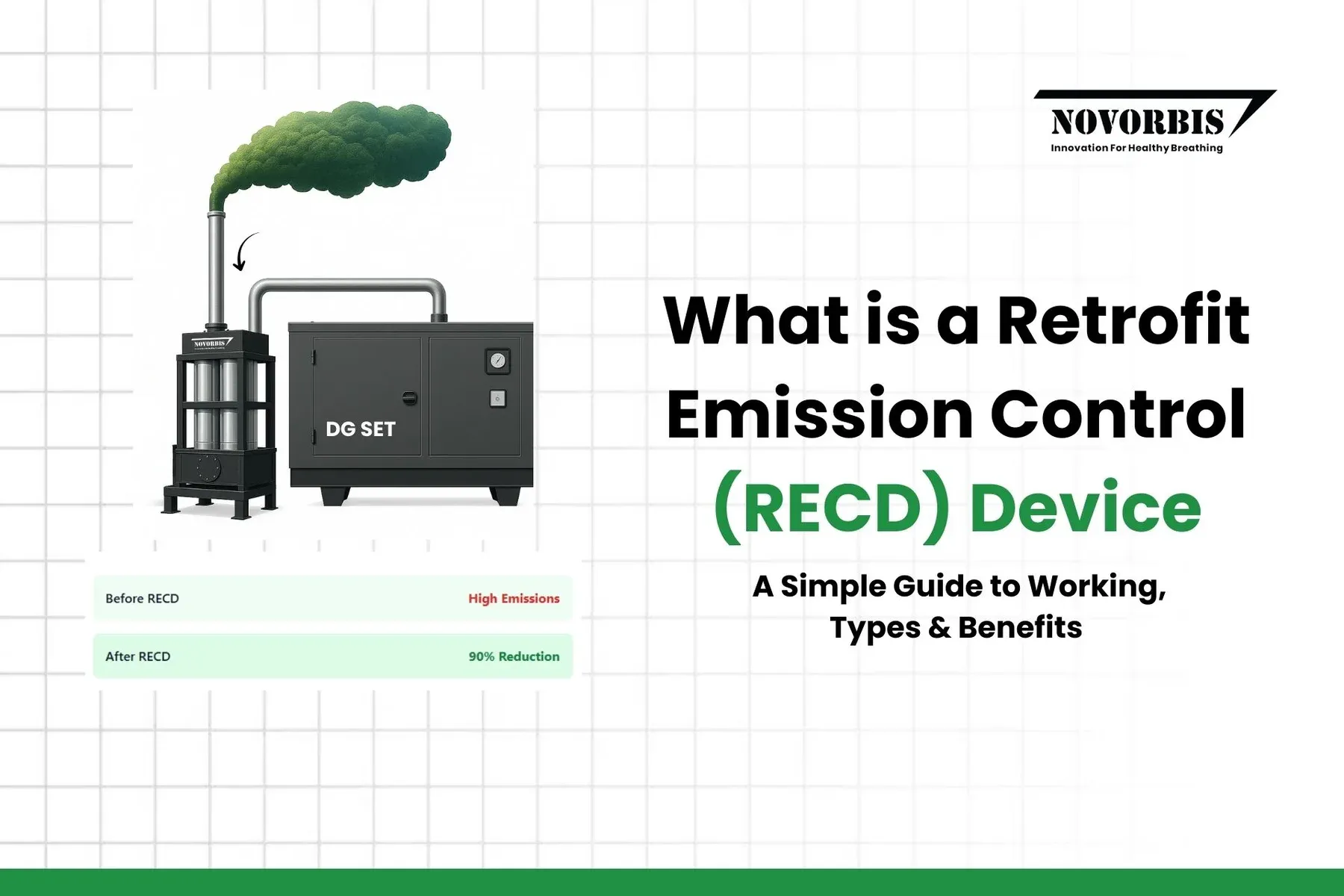
With increasing air pollution and strict environmental regulations, controlling emissions from diesel generators has become essential. This is where RECD for DG Set plays a crucial role. If you’re new to this concept, this guide will clearly explain the meaning, working, and benefits of RECD in simple terms. Meaning of RECD for DG Set RECD stands for Retrofit Emission Control Device. It is a pollution-control device installed on the exhaust system of an existing diesel generator (DG set) to
1. To Curb Harmful Emissions from Diesel Generators Diesel generator (DG) sets emit particulate matter (PM), nitrogen oxides (NOx), carbon monoxide (CO), and hydrocarbons (HC) — all of which are harmful to human health and the environment. These emissions contribute significantly to urban air pollution, especially in industrial and densely populated areas like Delhi-NCR, Bengaluru, Mumbai, etc. The CPCB has recognised that existing DG sets often do not meet current emission standards and there
If you’re planning to install a Retrofit Emission Control Device (RECD) on your diesel generator (DG set) to meet CPCB emission norms in India, understanding the cost structure and what affects pricing is key before you get quotes from vendors. Typical Price Range for RECD in India The price of an RECD system can vary widely depending on DG capacity, technology, and vendor options. Here are some real price examples: Indicative RECD Device & Kit Prices * RECD for small DG sets (e.g., ~80 k
Diesel Generator (DG) sets are essential for backup power across industries, hospitals, commercial buildings, and residential complexes. However, DG sets are also a major source of air pollution. To address this, Retrofit Emission Control Devices (RECDs) have become a critical solution—especially for existing and older DG sets. This complete guide explains what a Retrofit Emission Control Device is, how it works, why it is required, types, benefits, costs, and compliance requirements—in simple
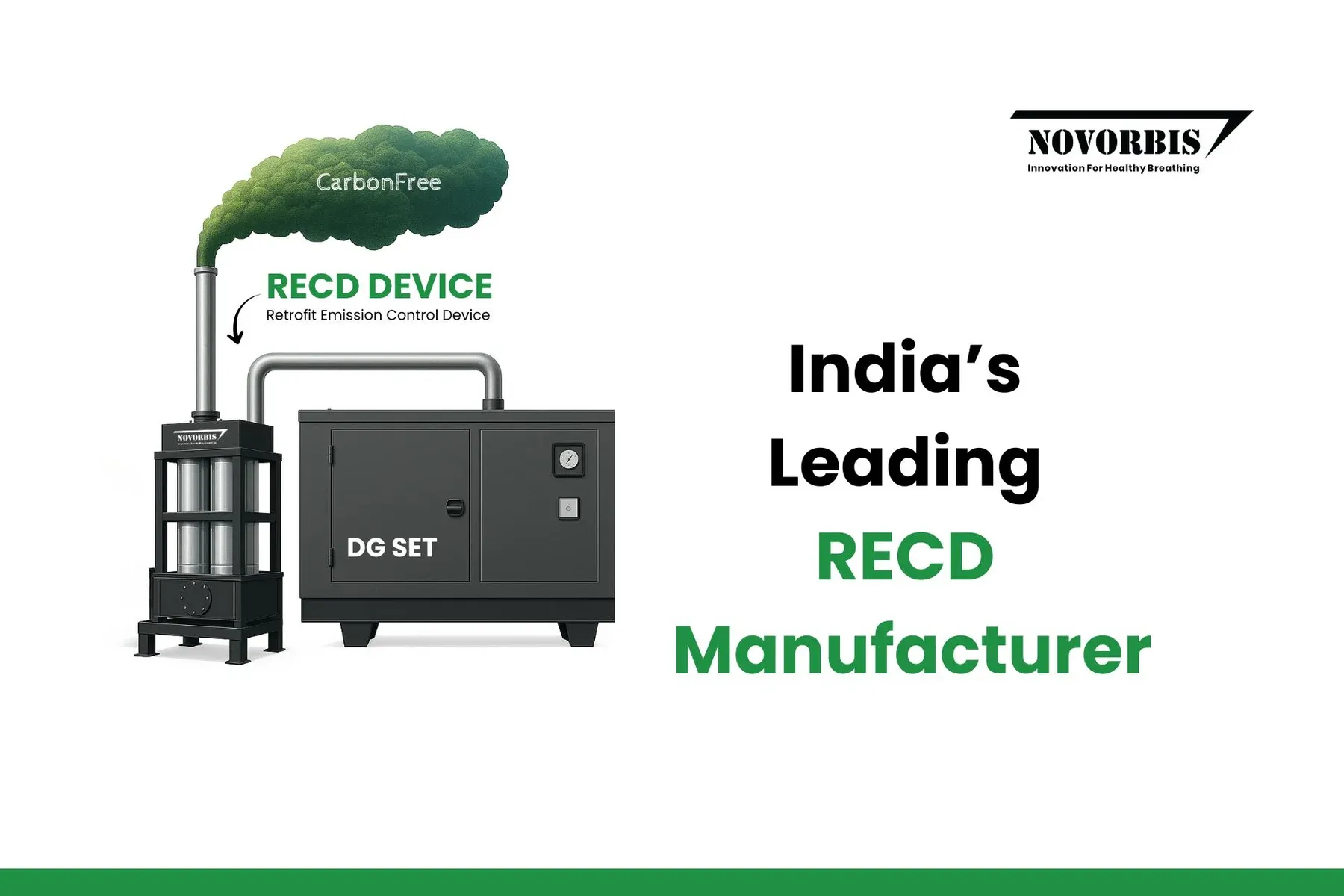
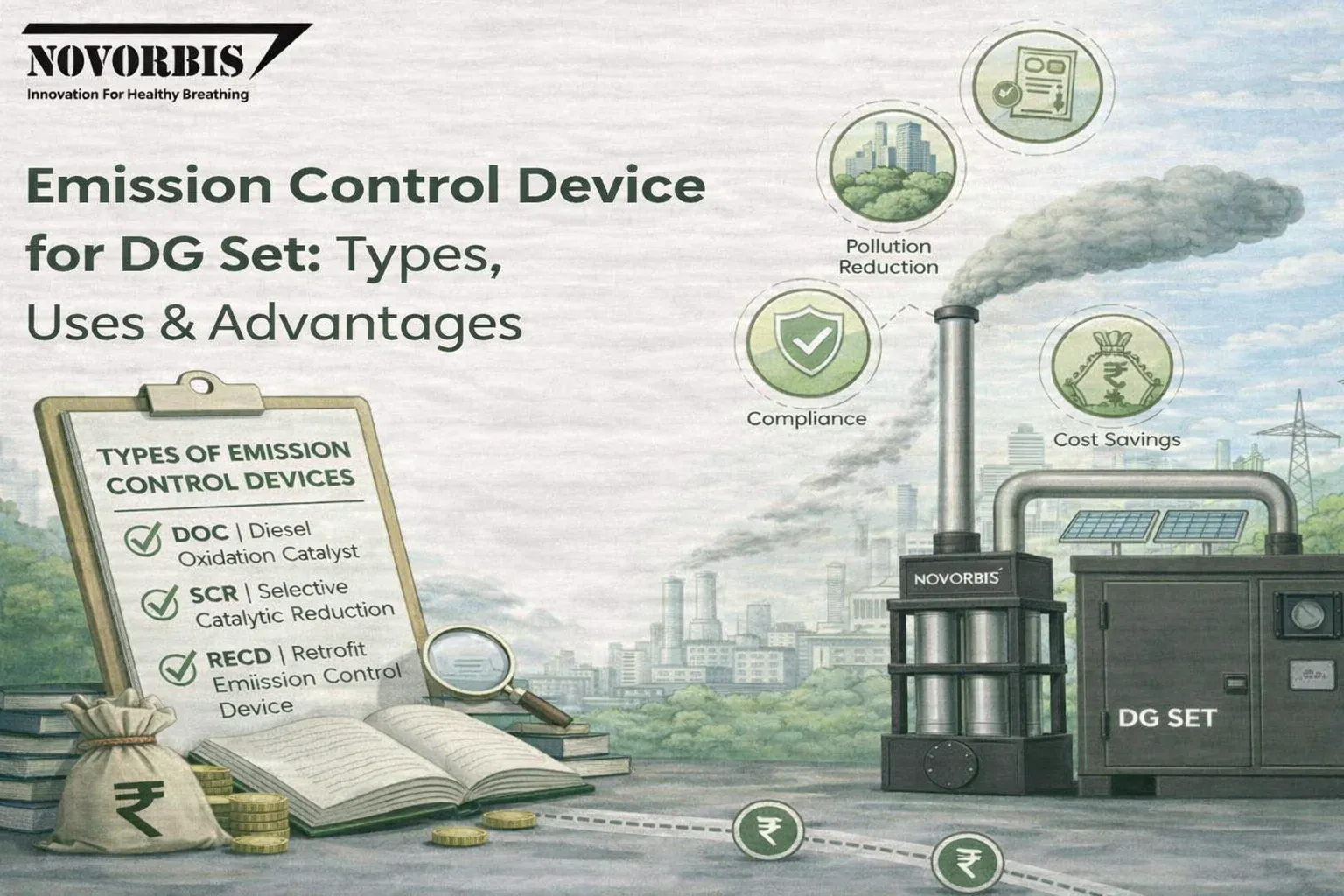
Diesel Generator (DG) sets are widely used for backup and continuous power supply in industries, commercial buildings, hospitals, and residential complexes. However, DG sets are also a significant source of air pollution. To address this issue, Emission Control Devices (ECDs) for DG Sets are used to reduce harmful exhaust emissions and ensure regulatory compliance. This guide explains what an emission control device is, its types, uses, and advantages in a clear and beginner-friendly way. Wha
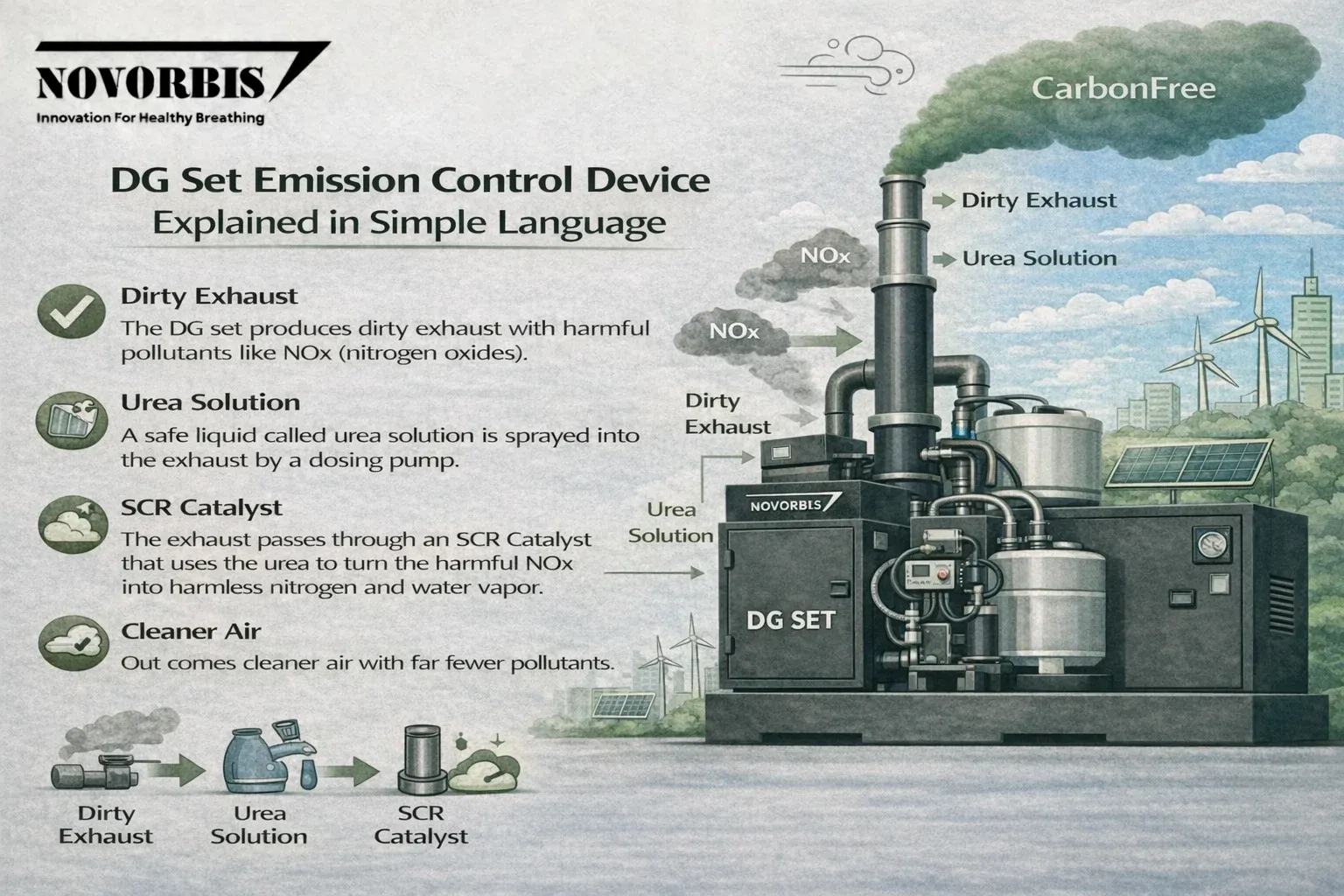
Diesel Generator (DG) sets are commonly used for power backup in factories, hospitals, offices, malls, and residential societies. While DG sets are very useful, they also produce smoke and harmful gases that pollute the air. To reduce this pollution, an Emission Control Device is used with DG sets. Let’s understand this concept in very simple language. What Is a DG Set Emission Control Device? A DG Set Emission Control Device is a special pollution-control unit fitted to the exhaust (smoke o
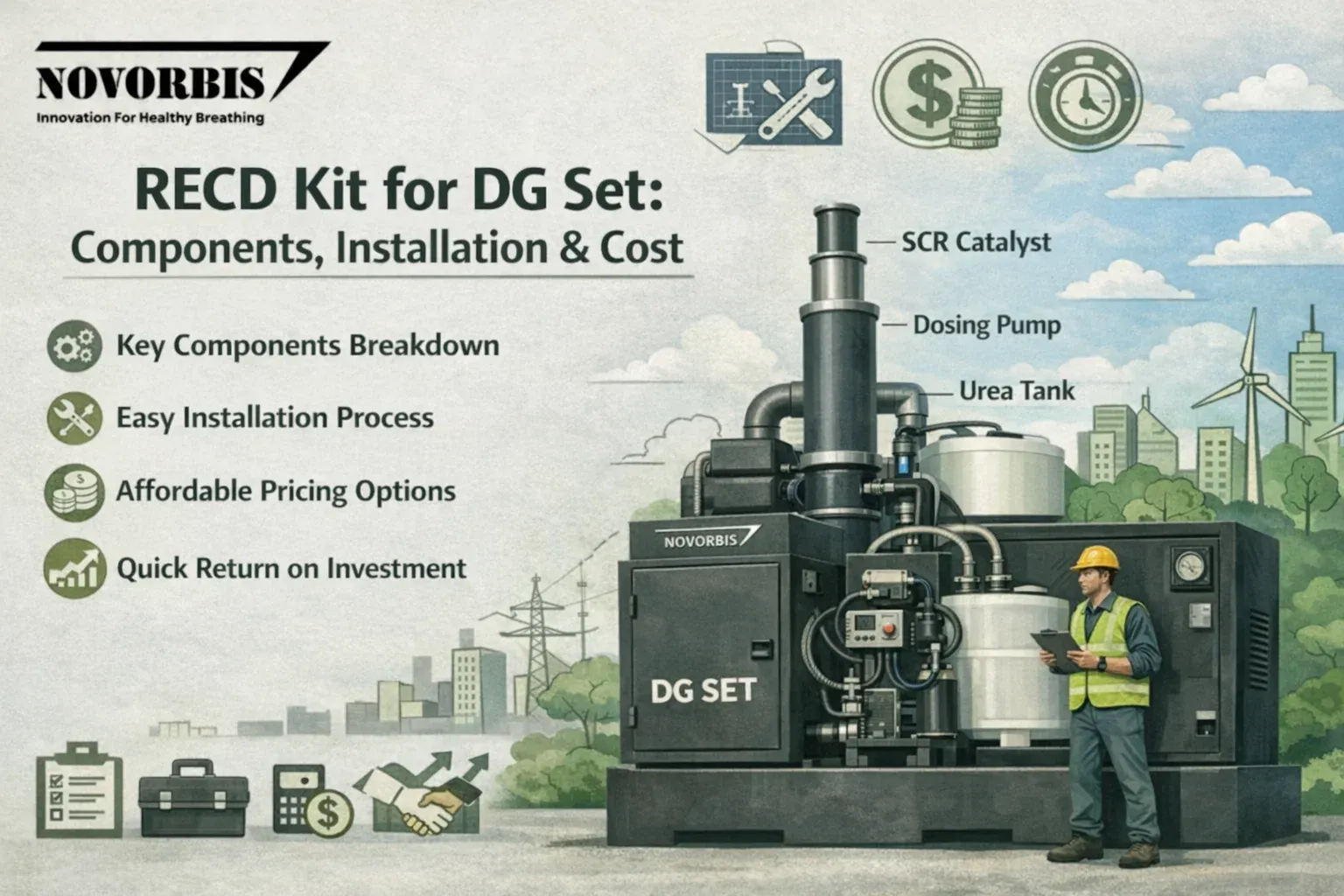
With strict pollution norms in India, installing an RECD Kit for DG Set has become essential for many diesel generator owners. An RECD kit helps reduce harmful emissions, ensures legal compliance, and allows existing DG sets to operate without replacement. This guide explains what an RECD kit is, its main components, how installation is done, and the expected cost—in clear and simple language. What Is an RECD Kit for DG Set? An RECD Kit (Retrofit Emission Control Device Kit) is a complete em
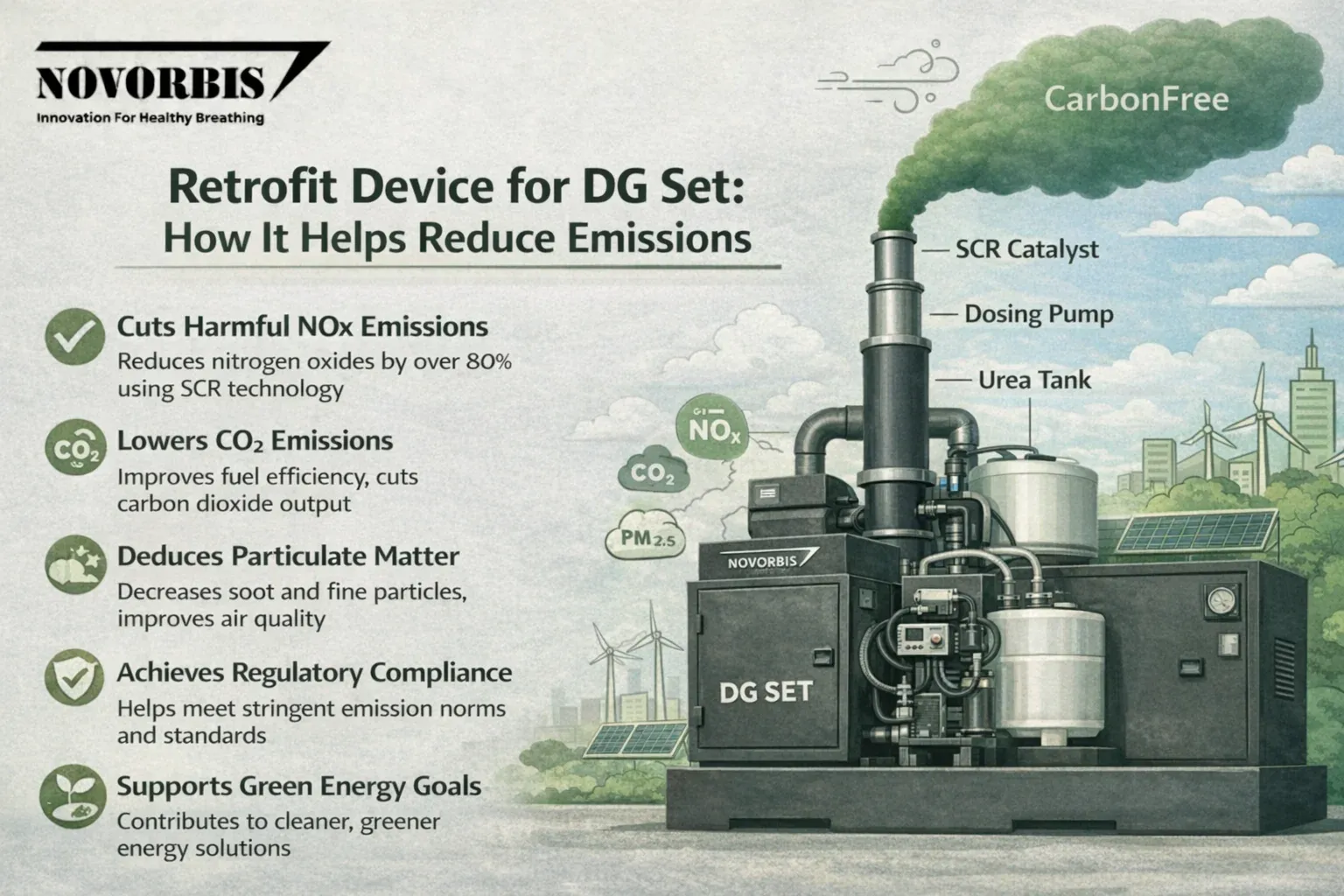
Diesel Generator (DG) sets are widely used across industries, hospitals, commercial buildings, and residential societies. While DG sets provide reliable power backup, they also release harmful emissions that contribute to air pollution. To control this pollution without replacing existing generators, a Retrofit Device for DG Set is used. This article explains what a retrofit device is and how it helps reduce emissions in simple and practical terms. What Is a Retrofit Device for DG Set? A Ret
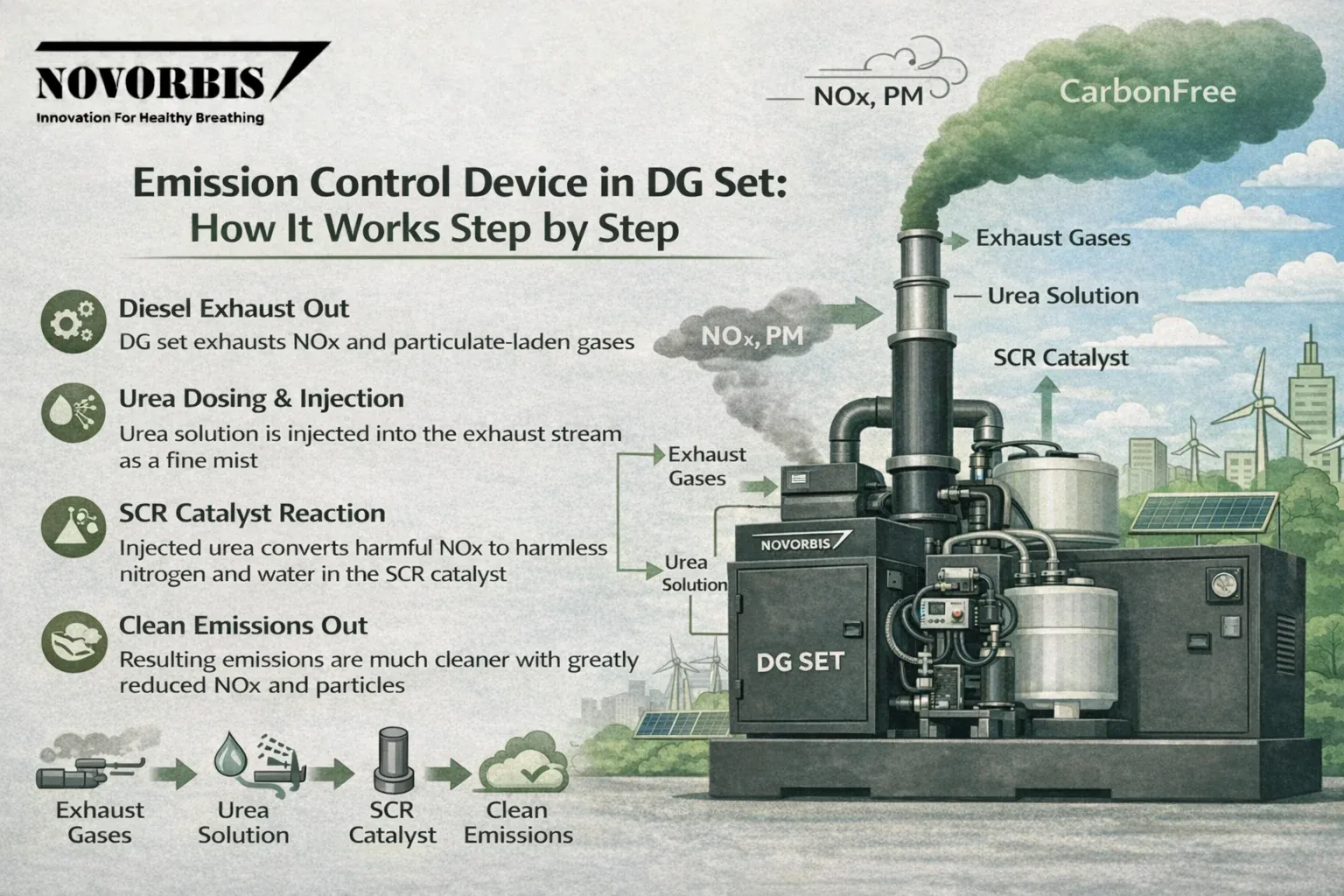
Diesel Generator (DG) sets are widely used for power backup, but they also release harmful smoke and gases into the air. To control this pollution, an Emission Control Device (ECD) is installed on the DG set exhaust. In this guide, we explain how an emission control device works in a DG set—step by step, in very simple language. What Is an Emission Control Device in a DG Set? An Emission Control Device is a pollution-reduction system fitted to the exhaust of a diesel generator. It helps DG s
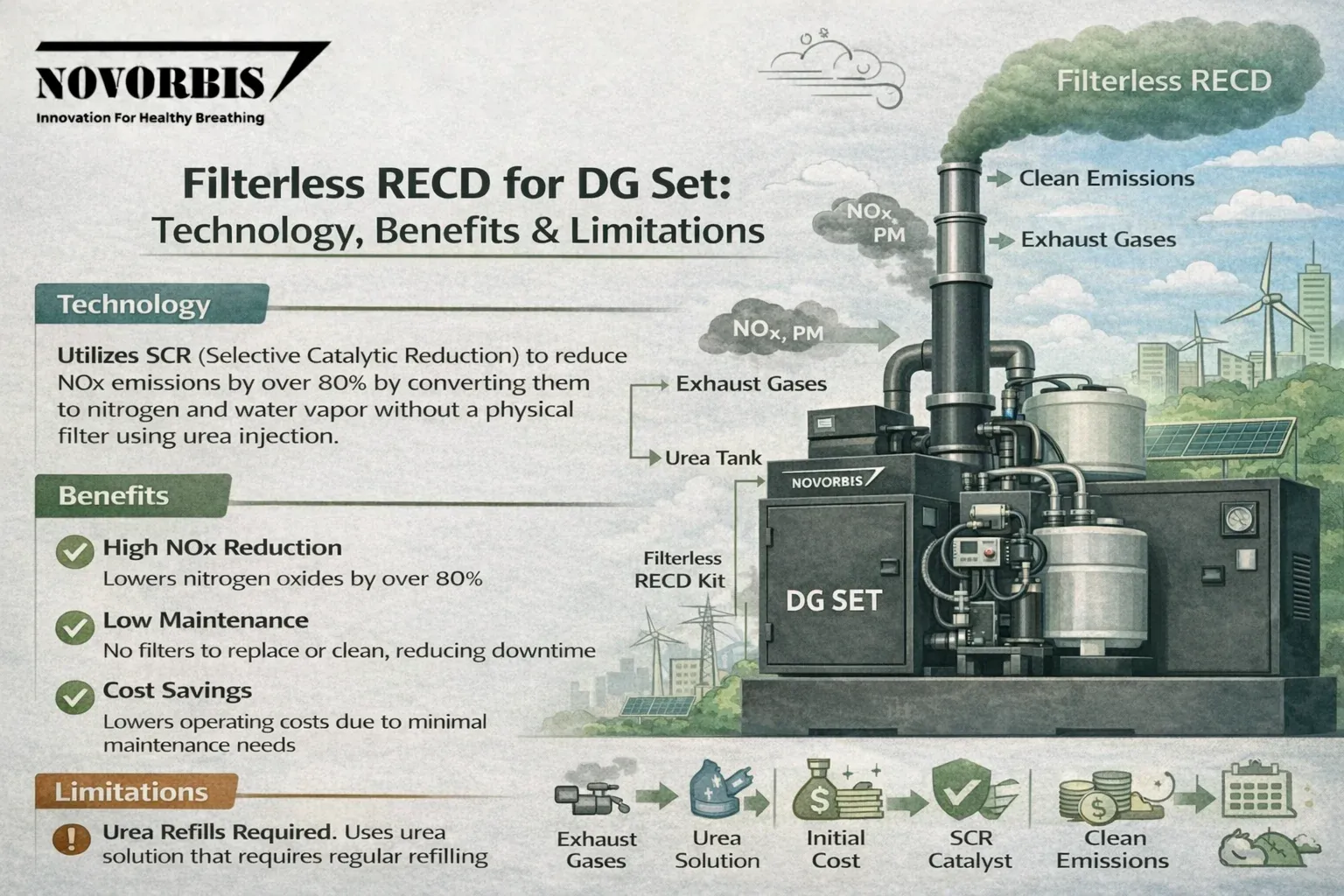
With stricter air-pollution norms in India, many DG set owners are now shifting from traditional filter-based systems to Filterless RECD solutions. A Filterless Retrofit Emission Control Device (RECD) is designed to reduce DG set emissions without using physical filters, making it a low-maintenance and efficient option. This guide explains the technology, benefits, and limitations of filterless RECD for DG sets in simple language. What Is a Filterless RECD for DG Set? A Filterless RECD is an
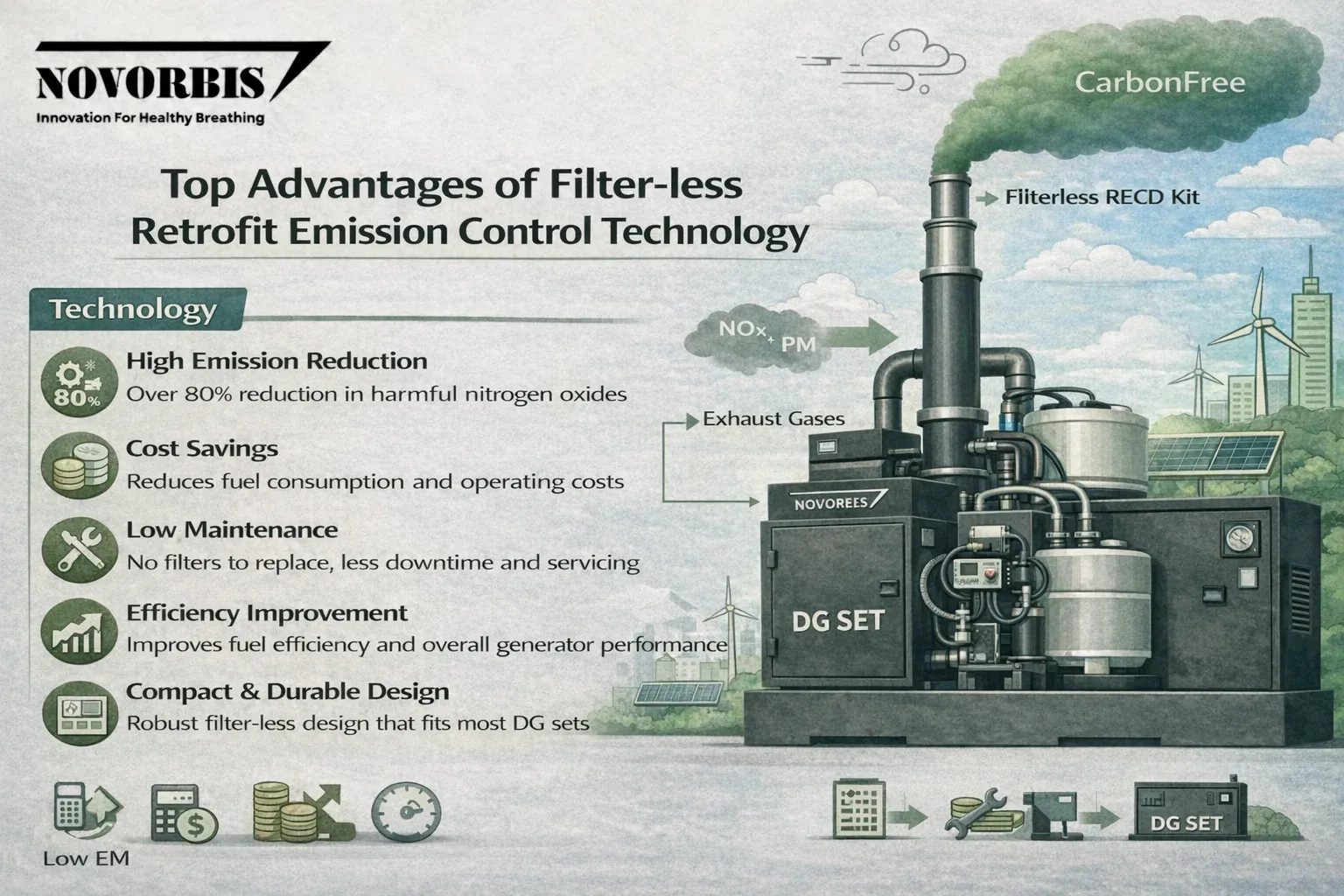
With growing concerns about air pollution and stricter environmental regulations, industries are actively searching for effective solutions to reduce emissions from diesel engines and generator sets. Diesel-powered equipment releases harmful pollutants that impact both the environment and public health. To address this challenge, modern solutions like Filter-less Retrofit Emission Control Technology have emerged as an efficient and sustainable way to control diesel emissions. Companies such as
Diesel Generator (DG) sets play a crucial role in providing backup power for industries, commercial buildings, hospitals, and infrastructure projects. However, DG sets also produce harmful emissions such as particulate matter, carbon monoxide, and nitrogen oxides that contribute to air pollution. To control these emissions and meet environmental regulations, many organizations are adopting advanced technologies like Filter-less Retrofit Emission Control Devices (RECDs). Companies such as Novorb
Industrial growth and increasing energy demand have significantly increased the use of diesel-powered equipment such as generator sets (DG sets), construction machinery, and industrial engines. While these machines are essential for uninterrupted operations, they also contribute to air pollution through harmful emissions. To address this challenge and meet environmental regulations, many industries are now adopting Filter-less Retrofit Emission Control Devices (RECDs). Companies like Novorbis I
Air pollution caused by diesel engines is one of the biggest environmental challenges today. Industries, commercial buildings, hospitals, and construction sites often rely on diesel generator (DG) sets, which release harmful pollutants into the atmosphere. To reduce these emissions and meet environmental regulations, modern technologies like the Filter-less Retrofit Emission Control Device (RECD) have been developed. Novorbis Itus is at the forefront of providing innovative emission control tec
How a Mid-Sized Industrial Facility Achieved CPCB Compliance Without Operational Disruption (2026) When enforcement under updated emission norms intensified, a mid-sized manufacturing facility operating a 125 kVA diesel generator faced a familiar dilemma: * Install a Retrofit Emission Control Device (RECD) immediately * Or risk penalties, inspection notices, and possible generator sealing This real-world RECD installation case study explains how the facility: Evaluated compliance r
A Compliance & Risk-Prevention Guide for Diesel Generator Operators (2026) In 2025 and beyond, diesel generator (DG) compliance in India is no longer a passive requirement — it is actively enforced. Under updated emission enforcement mechanisms guided by the Central Pollution Control Board (CPCB) and monitored through directives from the National Green Tribunal, industries operating DG sets above regulated capacity thresholds face measurable compliance exposure. The most common question decis
A Practical Selection Guide for CPCB-Compliant Installation (2026) Choosing the right Retrofit Emission Control Device (RECD) is no longer just a technical decision — it is a compliance-critical investment. With increasing enforcement from the Central Pollution Control Board and oversight from the National Green Tribunal, industries operating DG sets above 125 kVA must ensure: * Correct capacity matching * Verified emission reduction * Inspection-ready documentation * Long-ter
Pricing, Compliance Benefits, Lifecycle Cost & Strategic Return Explained In 2026, Retrofit Emission Control Devices (RECDs) are no longer optional upgrades for diesel generator (DG) sets — they are compliance-critical infrastructure. With active enforcement by the Central Pollution Control Board (CPCB) and oversight from the National Green Tribunal (NGT), industries operating DG sets above 125 kVA must treat RECD installation as a strategic financial decision. The conversation has shifted.
Cost Factors, Installation Charges & Maintenance Breakdown Explained As enforcement of diesel generator emission norms tightens across India, one of the most searched questions by industries is: What is the RECD price in India? For facilities operating DG sets above 125 kVA, installing a Retrofit Emission Control Device (RECD) is no longer optional — it is a compliance necessity. This guide provides: * Updated 2026 RECD pricing estimates * Cost per kVA analysis * Installation cha
A Practical Compliance Roadmap for DG Sets in India (2026) For most industries in India, diesel generators are not optional—they are critical for business continuity. But with rising pollution levels and stricter enforcement, DG sets have also become one of the most regulated assets on industrial premises. Today, staying operational means staying CPCB emission compliant. This guide explains how industries can achieve and maintain CPCB compliance using retrofit emission control solutions, with
Leading Retrofit Emission Control Device Makers for CPCB Compliance As India’s environmental regulations tighten, industries are increasingly searching for trusted Retrofit Emission Control Device (RECD) manufacturers whose products are accepted or aligned with Central Pollution Control Board norms. Rather than generic product sellers, this ranking focuses on manufacturers with credible performance, documented certification from testing agencies like ICAT or ARAI, and real installations in the
How Retrofit Emission Control Devices Are Evaluated in India (2026) As enforcement of emission norms tightens across India, RECD manufacturers are under increasing scrutiny—not just from customers, but from regulators. Industries no longer accept generic claims of “CPCB approved.” They want to understand how approval is obtained, what it means, and whether it will hold up during inspections. For manufacturers, this makes one thing clear: CPCB approval is not a label—it is a technical and proce
A Step-by-Step Compliance Checklist for Industries (2026) With enforcement tightening across India, one of the most common reasons industries fail environmental inspections is improper vendor verification. Many facilities install Retrofit Emission Control Devices (RECDs) believing they are compliant—only to discover during inspection that the vendor’s approval cannot be verified. This guide explains exactly how industries should verify CPCB-approved RECD vendors in India, using the same checks
Why CPCB Compliance Is No Longer Optional for Indian Industries Across India, environmental compliance has moved from paperwork to active enforcement. Industries that once treated pollution control as a secondary concern are now facing inspections, notices, penalties, and operational shutdowns from regulatory bodies like the Central Pollution Control Board (CPCB) and the National Green Tribunal (NGT). One major reason behind this shift is the significant pollution caused by in-use diesel gener
Why Industries Are Searching for a CPCB Approved RECD Vendor List With enforcement tightening across India, industries are under increasing pressure to demonstrate verifiable CPCB compliance for their diesel generators. During inspections, authorities no longer accept verbal assurances or generic marketing certificates. They verify: * Who supplied the RECD * Whether the vendor appears in CPCB-recognised records * Whether the installed device aligns with approved test reports This has led
India’s Urban Air Emergency Enters a Critical Phase (2025–2026) Air quality deterioration in India has now crossed from chronic concern to structural crisis. As we move through 2025–2026, India’s fastest-growing cities are facing a dangerous convergence of factors—industrial expansion, construction intensity, vehicle density, and persistent power instability. The result is sustained exposure to PM2.5 concentrations multiple times higher than global safety thresholds. Consolidated assessments a
Power outages don’t come with warnings and in India’s fast-growing urban and industrial ecosystem, diesel generator (DG) sets continue to play a mission-critical role. From hospitals and data centres to manufacturing units and residential complexes, DG sets ensure operational continuity when the grid fails. However, this reliability comes at a cost. Diesel generators are a significant source of particulate matter, toxic gases, and black carbon emissions, contributing heavily to deteriorating urb
Across rapidly expanding industrial and urban ecosystems, diesel generator (DG) sets remain the unsung heroes of uninterrupted power. From healthcare campuses and hyperscale data centers to manufacturing hubs and massive infrastructure projects, DG sets quietly step in when grid reliability falters—no drama, no delays. But here’s the flip side. While the lights stay on, unmanaged exhaust emissions slowly seep into the air we breathe. Particulate matter (PM), nitrogen oxides (NOx), hydrocarbons
Power That Can’t Pause, Air That Must Improve Across rapidly expanding industrial and urban ecosystems, diesel generator (DG) sets remain the backbone of uninterrupted power. When the grid fails, DG sets step in instantly—keeping hospitals operational, data centers online, factories productive, and construction sites running without delay. There’s no denying their importance. But there’s also no ignoring the downside: diesel exhaust emissions. These emissions don’t just disappear. They linger
Power Continuity Meets Environmental Responsibility Let’s face it—power cuts don’t ask for permission. They simply arrive. And when they do, diesel generator (DG) sets step in as silent protectors across industrial clusters, urban infrastructure, healthcare campuses, and technology hubs. They keep production lines moving, servers alive, surgeries uninterrupted, and essential services functional. But there’s an uncomfortable truth we can no longer ignore. Every time a DG set operates without p
Power That Never Blinks—Compliance That Never Fails Let’s face it—when the grid goes dark, business can’t afford to blink. From hospitals in the middle of critical surgeries to data centers running mission-critical workloads, reliable power backup is no longer a luxury. It’s a lifeline. Across India, diesel generator (DG) sets continue to shoulder this responsibility. But today, reliability alone isn’t enough. Stricter emission enforcement has fundamentally changed how DG sets are allowed to o
Power That Performs, Air That Breathes Reliable power backup is no longer just about keeping the lights on. In today’s environment-conscious and regulation-driven world, it is equally about how that power is produced. Diesel Generator (DG) sets continue to be the backbone of emergency and standby power across hospitals, IT parks, industries, commercial buildings, and residential communities—but their emissions have placed them under intense scrutiny. This is where RECD for DG Sets emerges as a
Let’s be honest—diesel generators aren’t going away anytime soon. From hospitals that can’t afford even a heartbeat of downtime to data centers guarding terabytes of mission-critical information, diesel gensets remain the unsung heroes of uninterrupted power. Yet, here’s the catch: while they keep the lights on, they also emit pollutants that cities, regulators, and communities can no longer shrug off. That’s exactly where Retrofit Emission Control Devices for Diesel Generators: Cleaner Power,
In today’s tightly regulated industrial and commercial environments, diesel generators are no longer judged solely on how reliably they deliver backup power. They’re expected to do much more. Modern DG sets must operate without interruption, comply with increasingly strict emission norms, and demonstrate measurable reductions in air pollution—all at the same time. That’s exactly why selecting the Best RECD for Maximum Efficiency isn’t just a compliance checkbox anymore. It’s a strategic, system
The Problem You Already Know About Picture this: Your factory starts its day with the familiar rumble of a diesel generator (DG set) kicking to life. Within seconds, a thick plume of black smoke billows out of the exhaust—the kind you've probably seen a thousand times. You don't really think about it. It's just "that smoke from the generator," right? Well, here's the thing: That black smoke isn't just unsightly. It's a mix of harmful pollutants called Particulate Matter (PM)—fine black soot th
Let’s be honest. For decades, the diesel generator (DG) set has been the unsung hero of Indian industry, healthcare, and infrastructure. When the grid goes down, that familiar, deep rumble is the sound of business continuity. It’s the sound of lights staying on, data being saved, and critical operations running without a hitch. But there’s another side to that coin. We’ve all seen it: the puff of black smoke, the acrid smell, the layer of soot. In a country grappling with air quality challenges
Driving Cleaner Power for a Sustainable India Diesel generator (DG) sets have long powered India’s commercial, residential, and industrial growth. However, their emissions contribute significantly to particulate matter and harmful gases that affect air quality. To combat this, the Central Pollution Control Board (CPCB) has mandated the installation of Retrofit Emission Control Devices (RECDs) on existing DG sets. In its latest 2025 update, CPCB has released a verified list of certified RECD ma